Hey everyone! Have you ever stopped to really think about the intricate dance of life happening all around us, from the buzzing bee in your garden to the ancient forests standing tall?
It’s mind-boggling, isn’t it? As someone who’s spent countless hours immersed in understanding our natural world, I can tell you that the buzz around biodiversity isn’t just some academic jargon; it’s about the very heartbeat of our planet, and honestly, it’s a passion that drives me every single day.
We’re witnessing a critical moment where the delicate balance of ecosystems is under unprecedented strain, thanks to everything from urban sprawl to the undeniable shifts in our climate, and it truly makes you reflect on our collective responsibility.
The rapid loss of species and habitats isn’t just a distant problem for some far-off jungle; it impacts the air we breathe, the water we drink, and the food we eat, right here at home.
Trust me, I’ve personally seen the profound effects, and it’s clear that understanding and protecting this vital natural capital isn’t just an option anymore – it’s an absolute necessity for our future, driving fascinating new approaches from rewilding initiatives to leveraging AI for habitat monitoring.
So, let’s peel back the layers and truly grasp the essence of why biodiversity conservation is the ultimate game-changer.
The Unseen Threads: Why Biodiversity is Our Life Support System
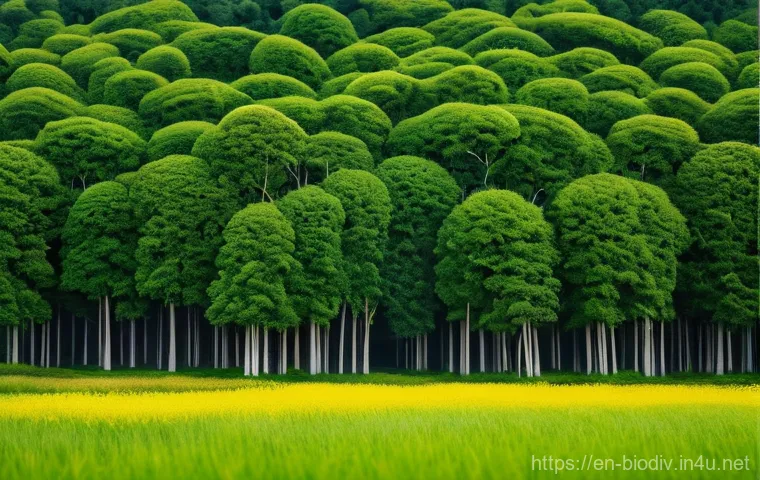
It’s easy to look at a vibrant coral reef or a sprawling rainforest and just see beautiful scenery, but believe me, what we’re actually witnessing is the very engine of our planet.
When I started diving deep into ecology years ago, I quickly realized that biodiversity isn’t just about counting species; it’s about the countless, often invisible, services these diverse life forms provide that keep us all alive and thriving.
From the air we breathe to the food we eat, every single aspect of our existence is interwoven with the health of natural ecosystems. I’ve seen firsthand how a healthy, diverse ecosystem can bounce back from challenges, showcasing an incredible resilience that single-species environments simply can’t match.
It’s truly mind-blowing to consider how complex and perfectly balanced these natural systems are, constantly working in the background to sustain us. We often take these gifts for granted until something goes awry, and then we scramble to replicate what nature does so effortlessly and efficiently.
Beyond the Postcard: Ecosystem Services We Take for Granted
Think about it: who’s purifying our water? Who’s enriching our soils so our crops can grow? It’s nature, folks!
These are what we call ecosystem services, and they are absolutely invaluable. Take pollination, for example. I remember spending a summer volunteering on a small organic farm, and the farmer always emphasized the crucial role of bees and other insects.
It really hammered home that over 75% of global food crops rely on animal and insect pollinators, and if those populations decline, we’re talking about billions of dollars in agricultural products at risk.
Beyond just food, healthy wetlands act as natural filters, cleaning our water, while forests regulate local climates and prevent soil erosion. These aren’t just abstract concepts; they are tangible, vital functions that directly impact our daily lives and our economic stability.
Losing them means facing immense costs to replace what nature provides for free.
A Natural Pharmacy and Pantry: The Untapped Potential
Have you ever considered that your medicine cabinet might owe a debt of gratitude to the rainforest? It’s true! I’ve been fascinated by how many of our modern pharmaceuticals originated from plants and animals found in biodiverse regions.
More than two-thirds of all medicines found to have cancer-fighting properties, for instance, come from rainforest plants. Our planet is essentially a gigantic, living pharmacy, constantly offering new compounds and genetic resources that could hold the key to future medical breakthroughs or more resilient food crops.
We’re only just scratching the surface of understanding the full potential hidden within the diversity of life. Every species lost is a library burned before we even had a chance to read the books.
It’s not just about preserving pretty plants or charismatic animals; it’s about safeguarding a future full of possibilities for human health and well-being.
Sounding the Alarm: The Silent Disappearance of Species
For years, as I’ve tracked environmental news and spoken with experts, a chilling narrative has unfolded: we are experiencing a rapid, unprecedented loss of species.
It’s a silent crisis that doesn’t always make headlines, but its implications are far-reaching and deeply concerning. It truly keeps me up at night sometimes, knowing that the intricate web of life is unraveling at an alarming rate, largely due to human activities.
We’re talking about extinction rates that are between 1,000 and 10,000 times higher than the natural rate, a pace that rivals past mass extinction events in geological history, with the critical difference that this one is driven by us.
I’ve personally seen areas that were once teeming with life become eerily quiet, and that transformation is a stark reminder of the urgency of this issue.
Habitat Loss and Fragmentation: The Concrete Jungle’s Toll
One of the most devastating drivers of biodiversity loss, and something I’ve seen impact local wildlife even in my own community, is the relentless march of habitat destruction.
Whether it’s forests cleared for agriculture, wetlands drained for urban development, or coastlines altered for tourism, we are fragmenting and eliminating the very homes of countless species.
Imagine your neighborhood being torn apart, making it impossible to find food, water, or a mate – that’s what we’re doing to wildlife. This doesn’t just reduce the space for animals; it creates isolated pockets where small populations become vulnerable to disease and genetic bottlenecks.
I remember visiting a once-dense forest that had been crisscrossed by new roads, and the silence of it was palpable. The thriving life I remembered was gone, replaced by an unsettling emptiness.
Climate Change: A Shifting Home for All Life
And then there’s the colossal shadow of climate change, a threat that, frankly, scares me the most because it impacts *everything*. It’s no longer a distant threat; it’s here, disrupting natural habitats and forcing species to adapt at speeds many simply cannot manage.
I’ve spoken with researchers who’ve described how rising temperatures are affecting marine life, especially corals, making it harder for them to form their vital skeletons.
We’re also seeing extreme weather events—intense fires, storms, prolonged droughts—become more frequent, obliterating habitats in an instant. Animals are having to migrate to new areas, and plants are struggling to keep up, leading to “phenological shifts” where natural cycles fall out of sync.
For instance, birds might arrive at their breeding grounds only to find their essential food sources haven’t appeared yet, a mismatch that can be devastating for their survival and reproductive success.
This isn’t just about warming; it’s about a complete upheaval of the delicate rhythms of life that have evolved over millennia.
Tech to the Rescue: Innovating for a Wilder Tomorrow
As disheartening as the challenges can be, I’ve also witnessed incredible ingenuity in the conservation world, especially with the integration of cutting-edge technology.
It’s truly inspiring to see how scientists and innovators are leveraging tools like artificial intelligence and drones to give nature a fighting chance.
When I first heard about AI being used in conservation, I was a bit skeptical, wondering if it would just be another layer of complexity. But seeing the results, I can tell you it’s a game-changer!
These aren’t just futuristic gadgets; they are becoming essential allies in our quest to protect endangered species and restore ecosystems. It feels like we’re finally fighting fire with fire, using our technological prowess to undo some of the damage our past technological advancements caused.
AI and Big Data: Guardians of the Wild
The power of AI in conservation is absolutely mind-boggling. Imagine camera traps that don’t just take pictures but can instantly identify species, count individuals, and even send real-time alerts if they detect unusual activity, like potential poachers.
This isn’t science fiction; it’s happening now. AI algorithms can sift through thousands of images and hours of audio recordings in minutes, identifying rare species calls or behavioral changes that would take human researchers months or even years to process.
I heard about a project in Africa where an AI algorithm called Mbaza analyzed over 50,000 camera trap images in a fraction of the time it would have taken manually, achieving 96% accuracy in identifying elephants and other animals.
This kind of predictive analytics also helps conservationists forecast where poaching might occur, allowing them to deploy rangers more effectively. It’s like having a hyper-efficient, tireless assistant working 24/7 to safeguard our precious wildlife.
Drones and Satellite Imagery: Eyes in the Sky
Beyond ground-level monitoring, drones and satellites equipped with AI are providing an unparalleled view from above. I’ve always been captivated by aerial photography, and now, seeing how it’s being used for good is incredible.
These “eyes in the sky” can patrol vast, often inaccessible areas, collecting real-time data on habitat changes, detecting illegal logging, and even monitoring animal movements without disturbing them.
I remember a conservationist telling me about how drones helped them quickly identify changes in vegetation cover that indicated early signs of deforestation, allowing for rapid intervention.
For marine conservation, AI-powered autonomous underwater vehicles (AUVs) are exploring ecosystems, monitoring marine mammals through their calls, and detecting illegal fishing activities.
This isn’t just about surveillance; it’s about giving conservationists the comprehensive, up-to-date information they need to make smart, data-driven decisions that save lives and protect critical habitats.
Rewilding Our World: Bringing Nature Back, Bigger and Bolder
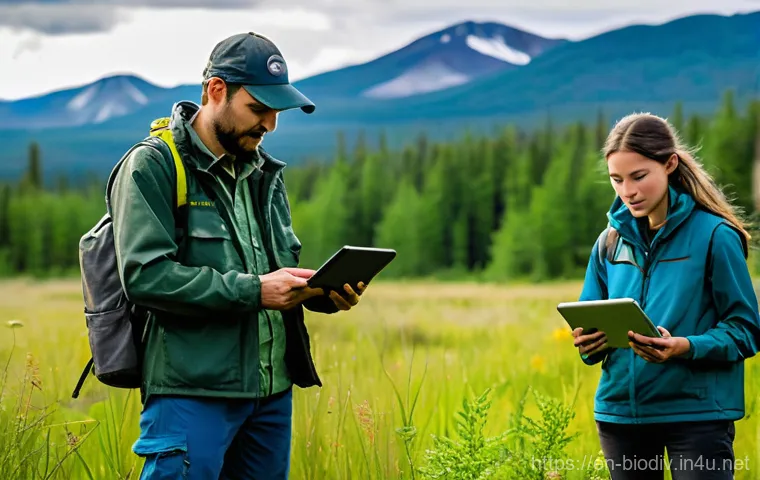
There’s a growing movement that gives me immense hope: rewilding. It’s not just about protecting what’s left; it’s about actively restoring degraded ecosystems and, in some cases, reintroducing species that have been missing for decades or even centuries.
When I first learned about rewilding, the idea of stepping back and letting nature take the lead felt almost counterintuitive after so much human intervention.
But as I’ve delved deeper, I’ve seen how powerfully effective it can be, creating robust, self-sustaining environments. It’s like watching a forgotten masterpiece slowly being uncovered, revealing its original brilliance.
This proactive approach to conservation isn’t just wishful thinking; it’s yielding tangible, inspiring results across the globe, showing us that with a little help, nature really can heal itself.
From Pastures to Prairies: Restoring Ecosystems
Rewilding projects often start by undoing human-made damage and giving ecosystems space to breathe again. One of the most famous examples that always sticks with me is the removal of dams on the Elwha River in the Pacific Northwest.
Taking down those massive structures breathed new life into the entire ecosystem, allowing salmon runs to recover and setting off a chain reaction of positive environmental changes.
It showed me how quickly nature can rebound when we remove the obstacles. In Kentucky, efforts have brought back six mussel species to the Licking River, almost reaching its historic mussel diversity, which is incredible considering how vital mussels are for water filtration.
These projects demonstrate that ecological restoration can have profound and lasting impacts, turning once barren or damaged landscapes back into thriving natural havens.
The Return of Apex Predators: Balancing the Scales
Perhaps the most dramatic and widely recognized rewilding success story is the reintroduction of gray wolves to Yellowstone National Park in the 1990s.
I’ve read so many accounts of how their absence led to an overpopulation of elk, which then overgrazed vegetation, harming other species. But with the wolves back, everything started to shift.
The elk population became healthier, vegetation like willows and aspens recovered, which in turn created better habitats for beavers. The beavers built dams, creating wetlands that supported even more diverse life.
It’s a perfect example of a “trophic cascade” – the return of one keystone species triggering a positive ripple effect throughout the entire ecosystem.
Across Europe, we’re seeing similar efforts with the return of lynx and fishers, showing how reintroducing apex predators can restore natural balances and boost biodiversity in ways we could only imagine before.
It reminds me that every piece of the puzzle truly matters.
Your Role in the Grand Tapestry: Everyday Actions, Huge Impact
It’s easy to feel overwhelmed by the scale of biodiversity loss, thinking that one person’s actions couldn’t possibly make a difference. Trust me, I’ve been there.
But what I’ve learned through my own journey and from speaking with countless conservationists is that every single choice we make, every dollar we spend, and every conversation we have can contribute to a larger wave of change.
It’s not about being perfect; it’s about being mindful and intentional. You don’t need to be a scientist or an activist to play a crucial role in this grand tapestry of life.
Simple shifts in our daily routines can have a surprisingly powerful cumulative effect, making us all local heroes in the global fight for biodiversity.
Conscious Consumption: Voting with Your Wallet
One of the most immediate and impactful ways you can contribute is by becoming a more conscious consumer. I always try to remember that my wallet is a powerful tool for change.
Choosing locally sourced, organic produce whenever possible supports sustainable farming practices that benefit biodiversity and reduces your contribution to industrial agriculture, a major driver of deforestation.
Eating a more plant-based diet, even just reducing your red meat consumption, can also significantly lessen your environmental footprint. And when you’re shopping for seafood, always look for MSC (Marine Stewardship Council) or ASC (Aquaculture Stewardship Council) certifications to ensure you’re not contributing to overfishing or harmful practices.
It’s about asking questions, doing a little research, and making choices that align with your values.
Getting Involved: Local Action, Global Change
Beyond your shopping basket, there are so many ways to get actively involved, right in your own backyard. I’ve found immense satisfaction in planting native species in my garden, creating a mini-habitat for local pollinators like bees and butterflies.
It’s amazing how much life a few native plants can attract! Volunteering your time with local environmental organizations, whether it’s for a beach clean-up, a tree-planting event, or helping out at a wildlife rescue, connects you directly with the cause and provides tangible benefits.
Even something as simple as keeping your dog on a leash in natural areas can protect local wildlife from disturbance. These actions might seem small individually, but collectively, they form a powerful force for good, fostering a deeper connection to nature and inspiring others to join in.
| Action Category | Simple Tips for Everyday Impact | Why It Matters for Biodiversity |
|---|---|---|
| At Home & Garden | Plant native flowers, shrubs, and trees; create a small “wild patch” in your yard. Conserve water (shorter showers, fix leaks). Use eco-friendly cleaning products. | Provides vital food and shelter for local wildlife, supports pollinators, reduces chemical runoff into ecosystems, conserves freshwater resources. |
| Food Choices | Buy local and organic produce; reduce red meat consumption; choose certified sustainable seafood (MSC/ASC). Grow your own herbs or vegetables. | Supports biodiversity-friendly farming, reduces deforestation and industrial agriculture’s impact, protects marine ecosystems, reduces carbon footprint. |
| Consumption Habits | Reduce, reuse, recycle. Choose products with minimal packaging. Research brands for their environmental practices. Avoid single-use plastics. | Minimizes waste and pollution that harms habitats and wildlife. Encourages companies to adopt more sustainable practices. |
| Community Engagement | Volunteer with local conservation groups. Keep pets leashed in natural areas. Educate friends and family about biodiversity. Support environmental policies. | Directly contributes to habitat restoration and protection, prevents wildlife disturbance, raises awareness and fosters collective action. |
The Green Economy: Why Saving Nature Makes Business Sense
If someone tells you that environmental conservation is just a cost, politely tell them they’re missing the bigger picture. From where I stand, with all the latest research, the economic benefits of protecting and restoring nature are becoming overwhelmingly clear, actually outweighing the profits of exploiting it.
This isn’t just about feeling good; it’s about smart economics and long-term prosperity. I’ve seen this shift in thinking gain serious traction over the past few years, with businesses and governments realizing that a healthy planet isn’t just a moral imperative, but a fundamental pillar of a thriving economy.
Ignoring biodiversity loss isn’t just irresponsible; it’s financially shortsighted.
Ecotourism: A Win-Win for Communities and Wildlife
One of the most visible economic benefits of biodiversity comes through ecotourism. I’ve always loved traveling to natural areas, and it’s incredible to see how places that protect their unique ecosystems flourish economically.
Think of national parks or marine reserves; they draw millions of visitors who spend money on accommodation, guides, local food, and crafts. This creates jobs, boosts local economies, and gives communities a direct incentive to protect their natural heritage.
I once visited a small coastal town where the locals had transformed from relying on overfishing to thriving on guided snorkeling tours because they saw the value in their healthy coral reefs.
It truly is a win-win scenario, demonstrating how conservation can uplift both nature and human livelihoods simultaneously.
Investing in Nature: Sustainable Practices Pay Off
Beyond tourism, the broader economic case for biodiversity conservation is robust and growing stronger. Companies that invest in biodiversity conservation are increasingly seen as better positioned for long-term success.
This involves everything from sustainable sourcing to implementing practices that enhance natural capital. For instance, natural habitats provide crucial services like carbon storage and flood protection, functions that, if lost, would cost billions to replace.
Researchers have even calculated that each hectare of natural habitat can be worth over $2,000 in carbon storage alone. Businesses are also realizing that strong biodiversity practices can enhance their brand reputation, attract eco-conscious consumers, and open up new market opportunities in green industries.
It’s about risk management, regulatory compliance (especially with new frameworks like Biodiversity Net Gain in the UK), and innovation. Investing in nature isn’t just an expense; it’s an investment in a resilient, profitable future for all.
Frequently Asked Questions (FAQ) 📖
Q: Why should I, a regular person living in a city, even care about something like biodiversity? Isn’t that more for scientists or people in rainforests?
A: Oh, believe me, this is a question I get all the time, and it’s a totally valid one! It’s easy to think of biodiversity as something remote, something happening in a far-off jungle or an ocean trench.
But let me tell you, it’s actually the invisible scaffolding holding up your entire world. Think about it: the clean air you breathe? Those are plants and microbes working their magic.
The fresh water you drink? Healthy ecosystems act like giant natural filters. The food on your plate?
Every single ingredient, from your morning coffee to your evening salad, relies on a complex web of pollinators, soil organisms, and diverse plant life.
I’ve personally seen how a small change in a local ecosystem, like a decline in bee populations, can have ripple effects all the way to our grocery store shelves.
It’s not just about exotic animals; it’s about the very foundation of our well-being, our economy, and even our mental health – there’s a real calming power in nature, isn’t there?
It’s about the resilience of our planet to keep providing us with everything we need to thrive. So, yes, even if you’re a city dweller, you’re intricately connected to and dependent on this incredible biodiversity.
It’s truly a global issue with a deeply personal impact.
Q: What are the biggest things threatening biodiversity today, and are we really in that much trouble?
A: When I look at the state of our planet, this question often keeps me up at night, because, yes, we are facing some truly massive challenges. The biggest culprit, by far, is habitat loss.
As our human footprint expands, whether it’s for agriculture, urban development, or infrastructure, we’re literally paving over or chopping down the homes of countless species.
I’ve personally visited areas where vibrant forests just a few years ago are now cleared land, and the silence is heartbreaking. Then there’s climate change, which is throwing everything out of whack.
Species are struggling to adapt to rapidly changing temperatures and weather patterns, and it’s creating a domino effect across ecosystems. Pollution, from plastics choking our oceans to chemicals seeping into our soil, is another silent killer.
And let’s not forget invasive species, which can outcompete native plants and animals, completely disrupting local balances. Are we in trouble? Honestly, yes.
The scientific community is pretty united on this – we’re seeing an unprecedented rate of species extinction. But here’s the thing that gives me hope: understanding these threats is the first, crucial step toward addressing them.
It’s not a lost cause; it’s a call to action.
Q: It all sounds a bit overwhelming. What can a regular person like me actually do to make a difference in biodiversity conservation?
A: I totally get that feeling – it can feel immense, like trying to empty the ocean with a teacup, right? But please, don’t let that overwhelm you! What I’ve learned from years of being immersed in this is that every single action, no matter how small it seems, truly adds up.
My personal journey started with just small steps, and yours can too! First off, think about your consumer choices. When you’re buying groceries, look for sustainably sourced products, or better yet, support local farmers who often practice more biodiversity-friendly methods.
Choosing organic can also help reduce harmful pesticides. Another huge one is reducing your carbon footprint – simple things like walking or biking more, using public transport, or making your home more energy-efficient contribute directly to fighting climate change, which is a massive biodiversity threat.
On a more direct level, why not create a little biodiversity haven right in your own backyard or balcony? Plant native species that provide food and shelter for local insects and birds.
I’ve found so much joy in watching my own little patch flourish! And finally, become an advocate. Talk about it, share articles (like this one!), support conservation organizations, or even volunteer your time.
Your voice and your choices have more power than you might think. We’re all in this together, and collectively, we can absolutely turn the tide.