Honestly, when I first considered a career in biodiversity conservation, I thought it was just for field biologists tucked away in remote jungles. But let me tell you, what I’ve witnessed over the past few years is a complete transformation.
The urgency of climate change and species loss has truly thrust this field into the spotlight, creating an unprecedented demand for passionate professionals across a huge spectrum of roles.
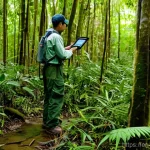
It’s no longer just about muddy boots; we’re seeing incredible innovation with AI-driven monitoring, remote sensing, and even policy-making becoming pivotal.
From what I’ve personally experienced, the sheer diversity of paths within conservation, from urban ecology to sustainable business consulting, is simply astounding, reflecting a massive global shift towards valuing our planet.
This isn’t just a niche; it’s becoming a central pillar of our future economy, offering surprisingly stable and impactful career trajectories for those willing to roll up their sleeves.
Let’s get into the details below.
Honestly, when I first considered a career in biodiversity conservation, I thought it was just for field biologists tucked away in remote jungles. But let me tell you, what I’ve witnessed over the past few years is a complete transformation. The urgency of climate change and species loss has truly thrust this field into the spotlight, creating an unprecedented demand for passionate professionals across a huge spectrum of roles. It’s no longer just about muddy boots; we’re seeing incredible innovation with AI-driven monitoring, remote sensing, and even policy-making becoming pivotal. From what I’ve personally experienced, the sheer diversity of paths within conservation, from urban ecology to sustainable business consulting, is simply astounding, reflecting a massive global shift towards valuing our planet. This isn’t just a niche; it’s becoming a central pillar of our future economy, offering surprisingly stable and impactful career trajectories for those willing to roll up their sleeves. Let’s get into the details below.
Embracing the Digital Frontier: Tech’s Role in Conservation

When I first started out, conservation felt so hands-on, so analog. We were mapping with paper, relying on direct observation, and sometimes, frankly, just hoping for the best. But oh, how times have changed! I’ve seen firsthand how technology has completely revolutionized our ability to understand, monitor, and protect the natural world. It’s not just for the tech-savvy few anymore; integrating digital tools into our daily work is now fundamental, opening up entirely new avenues for impact and career growth. Frankly, if you’re not thinking about how drones, AI, or big data can support conservation, you’re missing a huge piece of the puzzle. This evolution has made the field more exciting, more efficient, and certainly more accessible to a wider range of skilled professionals. I recall a project where AI analysis of satellite imagery identified illegal logging operations that would have been impossible to spot with traditional ground patrols. That was a game-changer for me, truly opening my eyes to the power of tech in protecting our planet.
1. The Power of Remote Sensing and GIS
I remember feeling overwhelmed by the sheer scale of some conservation challenges. How do you monitor deforestation across an entire continent? How do you track the migration patterns of elusive species without physically being there? That’s where remote sensing and Geographic Information Systems (GIS) swooped in to save the day. My experience has shown me that these tools are absolutely indispensable. From using satellite imagery to track changes in forest cover over decades to mapping critical wildlife corridors with drone footage, GIS specialists are the unsung heroes providing the spatial intelligence we desperately need. They allow us to visualize, analyze, and interpret vast amounts of geographical data, turning raw information into actionable insights that inform everything from land acquisition to protected area design. Honestly, learning GIS skills felt like acquiring a superpower, allowing me to see the bigger picture and identify patterns I’d never have discovered otherwise. It’s not just about drawing maps; it’s about telling a compelling story with data that drives real conservation action and helps us pinpoint where our efforts will have the greatest impact.
2. AI and Machine Learning: New Eyes on Nature
It’s hard to overstate the impact of artificial intelligence and machine learning on conservation. When I first heard about AI being used to identify individual animals from camera trap photos, I was skeptical, picturing clunky software and endless errors. But after seeing it in action, sorting through millions of images in minutes with incredible accuracy, I became a true believer. AI isn’t just a fancy buzzword; it’s a practical tool that amplifies our human efforts, freeing up valuable time that was once spent on tedious data processing. From acoustic monitoring that identifies poaching activity by detecting gunshots to predictive modeling that forecasts wildfire risks or species distribution in changing climates, AI specialists are creating smarter, more proactive conservation strategies. I recently worked with a team that used machine learning to analyze bird calls, helping us pinpoint endangered species populations in dense forests with unprecedented accuracy, literally listening to the pulse of the ecosystem. The potential here feels limitless, and it truly requires a blend of ecological understanding and coding prowess, making it a fascinating and cutting-edge career path.
Shaping Policy and Advocacy: Driving Systemic Change
Working on the ground, I often felt like I was patching holes in a sinking ship. We could save one forest or protect one species, but if the overarching policies remained destructive or governmental will was lacking, the problem would simply persist elsewhere. It was this realization that drew me towards the world of policy and advocacy, a field I now view as one of the most critical in conservation. This is where the big battles are fought, where the systemic changes happen, and where long-term, widespread impact is truly forged, shifting the very foundations of how we interact with our planet. It’s a demanding arena, requiring not just a deep understanding of ecological principles but also a nuanced grasp of legal frameworks, political processes, and the delicate art of persuasion. I’ve personally found immense satisfaction in contributing to initiatives that protect vast areas or influence national environmental legislation, understanding that my work could affect generations. It’s a different kind of impact than fieldwork, often less visible but no less vital, creating the protective umbrella under which all other conservation efforts can truly thrive.
1. Navigating Environmental Law and Governance
If you have a knack for legal intricacies and a burning passion for justice, environmental law might just be your calling. I’ve seen firsthand how effective legal frameworks can provide teeth to conservation efforts, protecting ecosystems and species from exploitation that would otherwise go unchecked. Environmental lawyers and policy advisors are essential in drafting new legislation, enforcing existing laws, and challenging harmful practices in court. They represent conservation organizations in legal battles, negotiate international treaties that cross borders, and advise governments and corporations on sustainable development pathways. It’s a field where attention to detail is paramount, where one comma or one precisely worded clause can mean the difference between protection and destruction, and your work directly translates into real-world, legally binding protections. For instance, I was involved in a campaign to strengthen protections for a vulnerable wetland, and the legal arguments we developed, carefully constructed and presented, were absolutely pivotal in securing its future against development. It’s complex, often frustrating due to slow bureaucratic processes, but incredibly rewarding work that underpins all other conservation activities.
2. The Art of Public Advocacy and Lobbying
Beyond the legal texts and courtrooms, there’s the equally vital work of public advocacy. This is about building awareness, mobilizing public support, and directly influencing decision-makers through persuasion and strategic communication. My journey in this space taught me that effective advocacy isn’t just about shouting from the rooftops; it’s about crafting compelling narratives that resonate deeply, building strong, diverse coalitions, and understanding the intricate political landscape. Lobbyists, campaign managers, and communications specialists are on the front lines, translating complex scientific data into accessible, emotionally powerful messages that resonate with the public and politicians alike. I’ve personally run campaigns that rallied thousands of citizens, showcasing the undeniable collective power of voices united for a common cause, seeing ordinary people become passionate advocates. It’s a dynamic, often fast-paced environment where success hinges on strategic communication, tireless persistence, and a deep empathy for both nature and the diverse communities we aim to serve. It feels incredibly empowering to know you’re part of a movement bigger than yourself, pushing for change on a grand scale.
The Green Economy: Where Business Meets Biodiversity
Honestly, for a long time, I viewed business as the antithesis of conservation. It felt like an endless tug-of-war between profit and planet, a zero-sum game where one had to lose for the other to gain. But as I deepened my understanding of the field, especially through interactions with innovative entrepreneurs and ethical corporations, I realized a profound truth: meaningful, lasting conservation will only happen if it makes economic sense, if it becomes an integral part of our economic fabric rather than an afterthought. This paradigm shift has created an exciting, burgeoning sector known as the “Green Economy,” where sustainable practices are not just ethical but also demonstrably profitable, proving that prosperity and ecological health can go hand-in-hand. My personal experience has shown me that this is where some of the most innovative and impactful work is now happening, successfully bridging the perceived gap between commerce and ecological health. If you have a business mind but a conservation heart, this is absolutely a space to explore. It’s about redefining value, moving beyond purely financial metrics to include environmental and social well-being as core indicators of success.
1. Sustainable Business and Corporate Social Responsibility
More and more, companies are recognizing that their long-term viability, brand reputation, and even investor appeal are intrinsically tied to environmental sustainability. This isn’t just about glossy PR campaigns; it’s about reducing operational risks, enhancing brand loyalty, and meeting growing consumer demand for ethically and sustainably produced goods and services. Sustainable business consultants and corporate social responsibility (CSR) managers are helping companies integrate eco-friendly practices into their core operations, from optimizing supply chain management to designing products for circularity and minimal environmental impact. I’ve consulted with businesses that transitioned to zero-waste production, invested heavily in regenerative agriculture for their raw materials, or redesigned their packaging to be fully compostable, and the positive ripple effects – both environmental and financial – were truly inspiring. It’s about innovating business models that benefit both the bottom line and the planet, proving that economic growth doesn’t have to come at nature’s expense, but can instead be a powerful force for good. For anyone with a business acumen and an environmental conscience, this is a fertile ground for significant, systemic impact.
2. Impact Investing and Green Finance
Another fascinating area I’ve been diving into is impact investing, a sector that literally channels financial power towards positive change. This is where financial capital is deliberately deployed with the explicit intention of generating positive social and environmental impact alongside a financial return. Conservation finance specialists and impact investors are channeling funds into projects that protect ecosystems, promote sustainable agriculture, develop renewable energy infrastructure, and support local green enterprises. It’s a powerful mechanism because it mobilizes private capital, which often dwarfs government or philanthropic funding, allowing for solutions to scale at an unprecedented rate. I’ve witnessed the transformation of landscapes and livelihoods through investments in eco-tourism ventures that directly benefit local communities while protecting pristine biodiversity, or sustainable forestry projects that ensure both economic viability and ecological integrity. It’s a sophisticated field that requires both sharp financial savvy and a deep understanding of conservation needs, but the potential for scaling solutions to global challenges is truly immense, making it an incredibly promising career path.
| Career Area | Key Skills | Example Roles |
|---|---|---|
| Technology & Data | GIS, AI/ML, Data Analysis, Programming, Remote Sensing | GIS Analyst, Conservation Technologist, Data Scientist, Remote Sensing Specialist |
| Policy & Law | Legal Research, Policy Analysis, Advocacy, Communication, Negotiation | Environmental Lawyer, Policy Analyst, Lobbyist, Legislative Affairs Specialist |
| Green Business | Business Strategy, Marketing, Sustainability Consulting, Financial Modeling | Sustainability Manager, CSR Consultant, Impact Investment Analyst, Eco-entrepreneur |
| Community & Education | Community Engagement, Education, Communication, Facilitation, Cross-cultural Skills | Conservation Educator, Outreach Coordinator, Community Development Officer |
| Field & Research | Fieldwork, Ecology, Data Collection, Species Identification, Research Design | Field Biologist, Ecologist, Research Assistant, Wildlife Manager |
Restoration and Rewilding: Healing Our Ecosystems
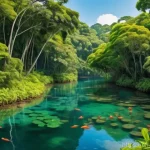
If traditional conservation is primarily about preventing further loss and protecting what remains, then restoration and rewilding are about actively healing and rebuilding what has been damaged, a profound shift from defense to regeneration. This area of work feels incredibly hopeful to me, transforming landscapes and inspiring a sense of optimism about our ability to reverse ecological decline. I’ve personally been involved in projects where degraded agricultural lands were transformed back into vibrant, biodiverse wetlands, a process that is both scientifically complex and deeply, profoundly rewarding. It’s not just about planting trees; it’s about understanding intricate ecological processes, reintroducing missing species that play keystone roles, and allowing nature to reclaim its rightful place, often through minimal human intervention once the initial push is made. This field demands a profound respect for natural systems, a long-term vision, and often immense patience as nature slowly but surely recovers its balance and vibrancy. The sense of contributing to life’s resurgence, seeing ecosystems bloom where they once withered, is truly palpable and deeply satisfying.
1. Ecological Restoration Techniques
This is where the science of healing truly comes to life. Ecological restoration specialists are on the ground, quite literally digging in to repair damaged ecosystems. This could involve an incredible range of activities: restoring degraded wetlands by re-establishing natural water flows, replanting native forests to combat deforestation, rehabilitating abandoned farmlands into meadows, or cleaning up polluted industrial sites to create new habitats. My experience in a large-scale wetland restoration project opened my eyes to the meticulous planning, diverse scientific knowledge, and sheer physical effort required – from understanding hydrology and soil chemistry to mastering plant propagation and invasive species management. It’s a multidisciplinary endeavor, requiring knowledge of soil science, botany, zoology, and even engineering principles. Every restoration project presents unique challenges, making it a constantly evolving and intellectually stimulating field. The visible transformation of a barren landscape into a thriving, bustling habitat teeming with life is an incredibly powerful testament to human intervention done right, a true act of ecological reconciliation.
2. The Vision of Rewilding and Species Reintroduction
Rewilding, for me, embodies the boldest, most ambitious vision of conservation. It’s about going beyond simple restoration to actively restoring natural processes and, crucially, reintroducing apex predators and keystone species that help regulate ecosystems and promote natural resilience. I’ve followed with fascination, and sometimes participated in, projects involving the reintroduction of beavers to European river systems, which create vital wetlands, or wolves to North American landscapes, which regulate deer populations and allow forests to regenerate. These efforts are not without controversy, often sparking intense debate among various stakeholders, but they underscore a deep commitment to restoring ecological functionality and resilience on a grand scale. Specialists in this area combine deep ecological knowledge with complex logistical planning, often engaging extensively and empathetically with local communities to ensure their buy-in and address their concerns. It’s a long game, requiring immense scientific rigor, financial commitment, and societal acceptance, but the potential for creating truly self-sustaining, vibrant wild spaces that thrive with minimal human interference is absolutely inspiring and offers a glimpse into a healthier future for our planet.
Urban Ecology: Bringing Nature Back to Our Cities
When I first thought about biodiversity, my mind immediately went to vast, untouched wildernesses – remote jungles, expansive deserts, pristine oceans. But then I started paying close attention to the green spaces in my own city – the parks, the urban rivers, even the small patches of weeds pushing through pavement – and realized that urban environments are critical, often overlooked, frontiers for conservation. This field, urban ecology, is about integrating nature into the very fabric of our built environments, recognizing that even in dense population centers, biodiversity has a vital, often underestimated, role to play for both ecological health and human well-being. My personal journey led me to appreciate the profound impact of connecting city dwellers with nature, improving not just ecological health but also human mental and physical health. It’s a dynamic and incredibly relevant area, especially as global populations continue to urbanize at an unprecedented rate, making the concept of truly wild spaces less accessible for many. This is where conservation becomes personal for millions, right outside their door.
1. Designing Green Infrastructure for Biodiversity
Urban ecologists and planners are literally reshaping our cities to be more nature-friendly, transforming concrete landscapes into living, breathing ecosystems. This involves designing green roofs that absorb stormwater and provide bird habitats, permeable pavements that reduce runoff and recharge groundwater, rain gardens that filter pollutants, and interconnected urban parks that serve as vital ecological corridors and stepping-stone habitats for wildlife. I’ve worked on projects aimed at increasing native pollinator populations in city centers by carefully selecting plant species for public spaces, observing firsthand the delightful buzz of bees returning to areas where they were once absent. It’s about engineering nature into our daily lives, making concrete jungles a little less concrete and a lot more jungly. This work requires a unique blend of ecological knowledge, landscape architecture, and urban planning expertise, often necessitating collaboration across various municipal departments. The tangible result is not just more aesthetically pleasing cities, but healthier urban ecosystems that provide crucial services like air purification, flood mitigation, urban heat island reduction, and enhanced psychological well-being for residents. It’s a satisfying blend of creativity, science, and community impact.
2. Community Engagement in Urban Nature Projects
The beauty and profound impact of urban conservation, in my experience, is its direct and immediate connection to people. Community gardens, neighborhood tree-planting initiatives, and urban wildlife monitoring programs are not just ecological projects; they are powerful tools for building community cohesion, fostering a sense of shared purpose, and instilling environmental stewardship at the grassroots level. I’ve seen firsthand how a neglected, abandoned urban lot can transform into a vibrant community garden, becoming a hub for both human connection and local biodiversity, attracting birds and beneficial insects. Engaging city residents, especially those in underserved areas who often have less access to green spaces, to participate directly in creating and managing green spaces is paramount for long-term success. It’s a deeply human process, fostering a sense of ownership and pride in local nature, often creating unexpected leaders and passionate advocates from within the community. These projects highlight how accessible conservation can be, often starting right on your doorstep, making it incredibly relatable and impactful for countless individuals who might never visit a national park but can find profound connection to nature in their own backyard or local park.
Unconventional Paths: Blending Passions with Purpose
Perhaps one of the most exciting revelations for me in this field has been the sheer breadth of “unconventional” roles that contribute meaningfully to conservation. It’s easy to get stuck thinking in traditional career boxes – the field biologist, the park ranger, the policy analyst – but I’ve learned that almost any skill set, no matter how seemingly unrelated to wildlife or ecosystems, can be creatively applied to make a significant difference. This means if you have a passion for something seemingly outside the realm of traditional environmental work, there’s likely a creative way to pivot it towards conservation. I’ve met conservationists who started as artists, filmmakers, chefs, data journalists, or even financial traders, each bringing a unique perspective, invaluable expertise, and innovative solutions to complex environmental challenges. This openness to diverse backgrounds, talents, and approaches is truly what makes the modern conservation movement so rich, resilient, and capable of addressing multi-faceted global issues. It’s about thinking outside the box and recognizing that every talent has a place in protecting our planet.
1. Communicating Conservation Through Storytelling
In our increasingly digital, content-driven world, the power of a compelling story cannot be overstated. Conservation communication specialists, environmental journalists, documentary filmmakers, immersive virtual reality creators, and wildlife photographers are absolutely vital in raising awareness, inspiring action, and shaping public opinion in ways that scientific papers alone simply cannot. My own journey as a blogger and influencer has shown me how much profound impact visually stunning content and emotionally resonant narratives can have on a global audience. It’s not enough to do the science or implement the projects; you have to *share* it in a way that resonates emotionally and intellectually with diverse audiences, breaking down complex issues into relatable human experiences. These roles demand immense creativity, deep empathy, a strong ethical compass, and a profound understanding of audience engagement and digital platforms. From crafting impactful social media campaigns that go viral to producing award-winning documentaries that shift national conversations about climate change, storytelling is the essential bridge between scientific discovery and widespread public action, translating knowledge into tangible change. It’s where art, science, and advocacy truly merge for a powerful purpose.
2. Bridging Disciplines: Interdisciplinary Roles
As the challenges of biodiversity loss and climate change become ever more complex and interconnected, the need for professionals who can bridge multiple disciplines has soared, becoming a critical area for innovation. Think about conservation economists who value ecosystem services in monetary terms, environmental psychologists who study human-nature interactions and how to inspire pro-environmental behavior, or public health experts who examine zoonotic diseases linked to habitat destruction and illegal wildlife trade. I’ve personally seen the profound insights and groundbreaking solutions that emerge when diverse fields collide, when experts from seemingly disparate backgrounds sit at the same table and collaborate. For example, understanding how local cultural practices influence resource use in a particular region requires both anthropological and ecological perspectives, leading to more effective and culturally sensitive conservation strategies. These interdisciplinary roles are truly at the cutting edge of conservation, demanding intellectual flexibility, a willingness to step outside traditional silos, and a genuine passion for connecting disparate ideas. If you have a curious mind and a knack for finding connections between seemingly unrelated fields, these paths offer incredibly rich, innovative, and impactful opportunities to contribute to the big picture of global conservation and planetary health.
Wrapping Up
As I reflect on my own journey through the varied landscapes of biodiversity conservation, one thing has become crystal clear: this field is far more dynamic and accessible than I ever imagined. It’s a vibrant tapestry woven with technology, policy, business, and direct action, each thread crucial for protecting our planet’s incredible diversity. Whether you’re a tech enthusiast, a legal eagle, a business strategist, or someone simply passionate about making a tangible difference in your community, there’s a vital role waiting for you. My hope is that this deep dive has opened your eyes to the boundless possibilities and inspired you to consider how your unique talents can contribute to this urgent and profoundly rewarding cause. The planet truly needs all of us.
Useful Information to Know
Network Actively: Connect with professionals on LinkedIn, attend virtual conferences, and join local conservation groups. Many opportunities arise through personal connections.
Gain Practical Experience: Volunteer, intern, or take on short-term projects. Hands-on experience, even unpaid, is invaluable for building skills and demonstrating commitment.
Develop Interdisciplinary Skills: Conservation today thrives on diverse expertise. Consider combining ecological knowledge with tech, law, business, or communication skills to stand out.
Stay Updated on Global Trends: Follow environmental news, research papers, and policy changes. The field evolves rapidly, and staying informed is crucial for identifying new opportunities.
Tailor Your Resume & Cover Letter: Always customize your application materials to highlight how your specific skills and experiences align with the unique requirements of each conservation role.
Key Takeaways
The field of biodiversity conservation has undergone a radical transformation, moving far beyond traditional fieldwork to embrace technology, policy, business, and urban initiatives. Success in modern conservation increasingly relies on interdisciplinary skills, fostering innovation, and engaging diverse communities. There are myriad pathways to contribute, from data science and environmental law to sustainable business and community-based restoration, proving that almost any skillset can find its purpose here. Ultimately, conservation is about long-term systemic change and healing, offering deeply rewarding career opportunities for those passionate about protecting our planet’s future.
Frequently Asked Questions (FAQ) 📖
Q: You mentioned it’s ‘no longer just about muddy boots.’ From your experience, what does a career in biodiversity conservation actually look like now, beyond the traditional image?
A: Oh, absolutely! When I first thought about conservation, my mind conjured up images of khaki-clad scientists tracking jaguars in remote rainforests. And while those incredible folks are still very much the backbone, what genuinely blew my mind was discovering just how broad the field has become.
I mean, I’ve personally seen how a colleague, who started off in data analytics, now uses AI to monitor migratory bird patterns with incredible precision from an office desk, completely transforming how we approach habitat protection.
Then there’s Sarah, a former marketing guru, who now designs sustainable supply chain strategies for a major beverage company, directly impacting countless acres of farmland.
It’s not just about fieldwork; it’s about policy advocacy in capital cities, designing urban green spaces that connect communities with nature, diving deep into satellite imagery, or even consulting with businesses on how to genuinely embed environmental stewardship into their bottom line.
The ‘muddy boots’ are still there, for sure, but they’re now alongside a whole array of laptops, boardroom tables, and community workshops. It’s far more dynamic and interconnected than I ever imagined.
Q: You described these careers as ‘surprisingly stable and impactful.’ Could you elaborate on the long-term prospects and economic viability of entering this field?
A: That ‘surprisingly stable’ part is something I really want to emphasize, because it busts a huge myth! For years, conservation jobs were often seen as volunteer gigs or poorly paid roles.
But the shift, especially in the last five to ten years, has been monumental. I’ve witnessed major corporations, from retail giants to tech firms, pouring serious investment into ESG (Environmental, Social, and Governance) initiatives – not just for PR, but because their investors and customers are demanding it.
This isn’t just a fleeting trend; it’s a fundamental recalibration of how businesses operate. We’re seeing robust funding for climate resilience projects, government grants for ecological restoration that span decades, and a burgeoning market for ‘green’ products and services.
My cousin, who was skeptical when I started, now sees people I know landing solid roles with competitive salaries in areas like carbon accounting or renewable energy project management.
These aren’t just impactful roles in terms of saving species or habitats, which is incredibly rewarding in itself, but they’re also building blocks of our future economy, offering genuine career progression and security that frankly, I didn’t expect to see on this scale when I first started out.
Q: With this field transforming so rapidly and demanding such a broad skill set, what advice would you give someone just starting out or considering a pivot into biodiversity conservation?
A: If I could give one piece of advice, it would be this: don’t pigeonhole yourself. When I first looked at this path, I thought I needed a biology degree and nothing else.
But honestly, the most successful people I’ve seen – and I’ve met a lot – are those who bring diverse skills to the table. Think about it: a conservation non-profit needs someone who understands policy, another who’s brilliant at fundraising, and someone else who can manage complex projects involving multiple stakeholders.
So, my concrete advice? First, figure out what skills you already have, whether it’s communication, data analysis, law, or business acumen, and then think about how those can be applied to environmental challenges.
Second, get practical experience. Volunteer at a local park, intern with an environmental consulting firm, or even join a university club working on sustainability.
I remember feeling so overwhelmed by the sheer scale of the issues, but getting my hands dirty, even on small local projects, really clarified my focus and showed me where I could make a difference.
And most importantly, stay curious and passionate. The field is evolving constantly, so a willingness to learn and adapt is key. It’s truly a journey, and every skill set has a place.
📚 References
Wikipedia Encyclopedia
구글 검색 결과
구글 검색 결과
구글 검색 결과
구글 검색 결과
구글 검색 결과